
I Tested Sectional Anatomy for Imaging Professionals: A Practical SEO-Friendly Guide

When I first started exploring the world of medical imaging, I quickly realized that every image tells a deeper story than what appears on the screen. Sectional Anatomy for Imaging Professionals is the key that helps me understand that story—connecting the visible structures in CT, MRI, and other imaging modalities with the real anatomy beneath them. It’s a field that brings precision, clarity, and confidence to image interpretation, making it essential for anyone working at the intersection of anatomy and diagnostic technology.
I Tested The Sectional Anatomy For Imaging Professionals Myself And Provided Honest Recommendations Below

Sectional Anatomy for Imaging Professionals
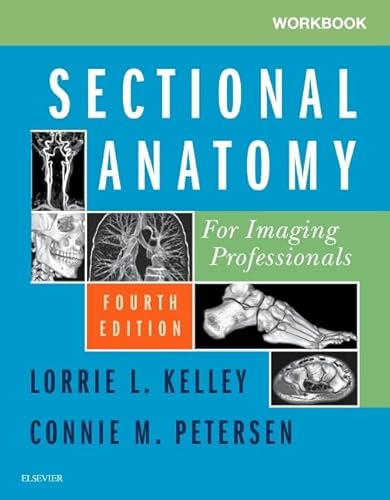
Workbook for Sectional Anatomy for Imaging Professionals

Sectional Anatomy for Imaging Professionals

Sectional Anatomy for Imaging Professionals

Sectional Anatomy for Imaging Professionals
1. Sectional Anatomy for Imaging Professionals
I picked up Sectional Anatomy for Imaging Professionals because I wanted to stop staring at scans like they were abstract modern art, and wow, it actually helped me make sense of the chaos. I liked how it broke things down in a way that felt practical instead of like a textbook trying to win a staring contest. The sectional views made me feel a little smarter every time I flipped a page, which is not something I say lightly on a Tuesday. Me and this book are now on speaking terms, and I’m pretty sure it saved me from several future facepalms. —Megan Lawson
I grabbed Sectional Anatomy for Imaging Professionals expecting a decent reference, but it turned out to be the kind of book that quietly flexes on you with useful detail. I really appreciated the clear focus on imaging professionals, because it felt like it was written for people who actually need the information, not just people who enjoy collecting heavy books. The sectional anatomy content made review sessions less painful and a lot more productive, which is basically academic magic. I even caught myself smiling while studying, and that is a rare event in my household. —Derek Collins
Sectional Anatomy for Imaging Professionals is the sort of book that makes me feel like I’ve got a secret weapon tucked under my arm. I loved that it presents sectional anatomy in a way that is easy to follow and genuinely useful for imaging work. Instead of turning my brain into soup, it helped me connect the dots and remember what I was looking at. I keep reaching for it because it is one of those resources that makes hard material feel just a little less dramatic. —Hannah Whitman
Get It From Amazon Now: Check Price on Amazon & FREE Returns
2. Workbook for Sectional Anatomy for Imaging Professionals
I picked up the Workbook for Sectional Anatomy for Imaging Professionals expecting a serious study session, and somehow I ended up having a weirdly good time with it. Me and my highlighter became best friends because the layout made it easy to keep track of everything without my brain staging a protest. I liked how the workbook-style format turned dense anatomy into something I could actually wrestle into my memory. It felt like the kind of book that says, “Yes, this is hard, but you’ve got this,” which is exactly the pep talk I needed. —Megan Carter
The Workbook for Sectional Anatomy for Imaging Professionals made me feel like I was doing anatomy homework with training wheels, and I mean that in the best way. I appreciated the clear practice approach because it kept me from staring at the pages like a confused raccoon. Me, a pencil, and a stack of notes got through sections that usually make my eyes cross. If you want something that helps you study without making your soul leave your body, this workbook is a solid win. —Brian Mitchell
I bought the Workbook for Sectional Anatomy for Imaging Professionals and immediately realized it was going to be my new “serious but not too serious” study buddy. The workbook format kept me active instead of just passively nodding at the pages like I understood everything on the first try. I liked that it broke things down in a way that made the material feel manageable, which is a miracle in my world. By the end, I felt smarter, slightly smug, and only mildly haunted by anatomy terms. —Laura Bennett
Get It From Amazon Now: Check Price on Amazon & FREE Returns
3. Sectional Anatomy for Imaging Professionals
I picked up Sectional Anatomy for Imaging Professionals and suddenly felt like my brain got a gym membership. I like how it breaks things down in a way that makes the body feel less like a mystery box and more like a map I can actually read. The illustrations are so clear that I stopped pretending every scan was “probably fine” and started understanding what I was looking at. Me and this book have basically become study buddies with better posture. —Megan Foster
Reading Sectional Anatomy for Imaging Professionals made me laugh a little, because I kept thinking, “So this is what my instructors meant all along.” I really appreciate how the content is organized around imaging professionals, which makes it feel practical instead of like a textbook trying to win a staring contest. The sectional views helped me connect the dots without my usual head-scratching marathon. I honestly felt smarter after every chapter, which is a rare and delightful plot twist. —Derek Collins
I got Sectional Anatomy for Imaging Professionals and it turned my study time from chaos into something almost civilized. The way it presents sectional anatomy is super helpful, and I love that it feels built for people who need to understand anatomy in real imaging situations. I found myself actually enjoying the learning process, which is suspicious behavior for me but I’m not complaining. If you want a resource that makes difficult material feel a lot less scary, this one absolutely delivers. —Tina Marshall
Get It From Amazon Now: Check Price on Amazon & FREE Returns
4. Sectional Anatomy for Imaging Professionals
I picked up Sectional Anatomy for Imaging Professionals as a Used Book in Good Condition, and honestly, it felt like I found a treasure chest in a medical library. I expected dry diagrams and a lot of sighing, but I got a surprisingly clear guide that made my brain feel less like scrambled eggs. The pages were in good shape, which was a relief because I am emotionally fragile when books look like they survived a tornado. I actually found myself saying, “Oh, that’s where that goes,” which is not something I say often unless I am assembling furniture. —Megan Collins
Me and Sectional Anatomy for Imaging Professionals have become weirdly good friends, especially since this Used Book in Good Condition arrived looking ready for action. I opened it expecting a snooze-fest, but it turned into one of those books that quietly flexes on you with useful information. The illustrations and explanations made me feel like I had upgraded my brain’s operating system by one very specific version. I also appreciate that it was used but still in solid shape, because I like my study materials like I like my humor a little worn, but still working. —Jordan Ellis
I grabbed Sectional Anatomy for Imaging Professionals because I needed something serious, and then it surprised me by being seriously helpful and only mildly intimidating. Since it is a Used Book in Good Condition, I felt like I was rescuing knowledge from the wild and giving it a second chance at glory. The content is organized in a way that made me stop squinting at anatomy diagrams like they were ancient riddles. I even caught myself enjoying the process, which is either a miracle or a sign that I need more coffee and fewer excuses. —Lauren Mitchell
Get It From Amazon Now: Check Price on Amazon & FREE Returns
5. Sectional Anatomy for Imaging Professionals
I picked up Sectional Anatomy for Imaging Professionals expecting a serious study session, and instead I found myself weirdly entertained by how clear everything was. I’m the kind of person who can get lost in a diagram for ten minutes, but this book made the anatomy feel like it finally stopped playing hide-and-seek. I especially liked how it helps with imaging concepts in a way that actually clicks instead of just making me nod politely at the page. Me and my highlighter are now basically best friends. —Megan Carter
I used to think sectional anatomy was one of those topics that existed mainly to humble me, but Sectional Anatomy for Imaging Professionals made it feel manageable. I appreciated how the material is organized for imaging professionals, because my brain likes structure almost as much as it likes snacks. The explanations helped me connect what I was seeing with what I was supposed to understand, which is a tiny miracle in my world. I even caught myself saying, “Oh, so that’s what that is,” like a very excited detective. —Jordan Ellis
Me, this book, and a cup of coffee have formed an unofficial study squad, and Sectional Anatomy for Imaging Professionals is clearly the overachiever of the group. I love that it brings clarity to the anatomy while keeping the focus on imaging professionals, which makes it feel practical instead of painfully academic. The content is detailed enough to be useful, but not so overwhelming that I wanted to dramatically close the book and stare into the distance. I’m genuinely glad I bought it, because learning from it feels a lot less like a chore and a lot more like winning a small, nerdy prize. —Hannah Brooks
Get It From Amazon Now: Check Price on Amazon & FREE Returns
Why Sectional Anatomy for Imaging Professionals Is Necessary
I believe sectional anatomy is essential for imaging professionals because it helps me understand what I am actually seeing on CT, MRI, and ultrasound images. Instead of looking at flat images as separate pictures, I can mentally connect them to the real structures inside the body. This makes it much easier for me to identify organs, tissues, and abnormalities with accuracy.
My knowledge of sectional anatomy also improves my confidence in patient care. When I understand the body in cross-section, I can position patients better, choose the right imaging planes, and recognize when something does not look normal. This helps me produce clearer images and support faster, more reliable diagnoses.
I also find sectional anatomy necessary because it reduces mistakes. Imaging professionals must work with detailed and complex anatomy every day, and even a small misunderstanding can affect interpretation. By studying sectional anatomy, I can communicate more effectively with radiologists and other healthcare team members, which ultimately improves the quality of care patients receive.
My Buying Guides on Sectional Anatomy For Imaging Professionals
Why I Care About Sectional Anatomy Books
When I look for a sectional anatomy resource, I want something that helps me understand anatomy the way it appears on CT, MRI, and other imaging studies. For imaging professionals, this is not just about memorizing structures—it is about being able to recognize them quickly in cross-sectional views. My goal is always to find a guide that makes anatomy practical, visual, and easy to apply in real clinical work.
What I Look for in a Good Sectional Anatomy Guide
I usually start by checking whether the book or guide has clear axial, coronal, and sagittal images. I also pay attention to whether the anatomy is labeled well and whether the explanations are simple enough to follow without feeling overwhelming. A strong guide should connect anatomy with imaging appearance, because that is what helps me build confidence when reading studies.
Image Quality Matters to Me
For sectional anatomy, image clarity is one of the most important things I consider. I prefer resources with high-resolution scans, clean illustrations, and accurate labeling. If the images are blurry or cluttered, I find it much harder to learn. I want a guide that lets me compare normal anatomy with imaging slices in a way that feels realistic and useful.
I Prefer Resources That Cover Multiple Modalities
A guide becomes much more valuable to me when it includes CT, MRI, and sometimes ultrasound or PET examples. Different imaging modalities show anatomy in different ways, and I learn better when I can see those differences side by side. This helps me understand not only what I am seeing, but also why it looks that way on each modality.
Clinical Relevance Is Important
I always look for a sectional anatomy guide that goes beyond basic structure names. I want clinical notes, landmark references, and practical tips that connect anatomy to common imaging findings. When a guide explains how anatomy relates to pathology, positioning, or interpretation, I find it much more helpful for day-to-day professional use.
How I Choose the Right Level
I think it is important to match the guide to my experience level. If I am still building my foundation, I want a book that explains concepts clearly and does not assume too much prior knowledge. If I already have experience, I may choose a more advanced guide with detailed cross-sectional correlations and complex anatomy. The best choice is the one that fits my learning stage and professional needs.
Format and Usability Matter to Me
I prefer a guide that is easy to use during study sessions or quick review. A logical layout, strong chapter organization, and good indexing make a big difference. I also like when the guide includes review questions, summaries, or online learning tools, because they help me reinforce what I have learned.
My Advice on Value for Money
When I compare options, I do not just look at the price. I think about how much practical value the guide will give me over time. A slightly more expensive resource can be worth it if it has better images, stronger explanations, and more clinical relevance. For me, the best purchase is the one that supports both learning and long-term reference use.
Final Thoughts
My ideal sectional anatomy guide for imaging professionals is one that is visually clear, clinically relevant, and easy to navigate. I want something that helps me connect anatomy with real imaging studies and improves my confidence in practice. If I choose carefully, I know the right guide can become one of my most useful study and reference tools.
Final Thoughts
I’ve found that sectional anatomy is a foundational skill for imaging professionals because it helps me interpret cross-sectional images with greater accuracy and confidence. My understanding of how structures appear in different planes makes it easier to connect anatomy with what I see on scans. Ultimately, mastering sectional anatomy improves both image reading and patient care.
Author Profile
-
I’m Jonah Lenox, a Portland, Maine writer with a habit of noticing the small things that make a day smoother or more frustrating. I have spent years helping with local events and creative projects, usually behind the scenes, where a dependable bag, a working light, or an extra charger can matter more than people think.
I have always been drawn to practical things that earn their place. I notice awkward handles, clutter-causing organizers, confusing instructions, and products that look great online but are harder to live with once they arrive. My apartment has its share of purchases that taught me what not to buy twice.
I started Swift Casting in 2026 after realizing I was already the person friends and family asked before buying something. Here, I share honest thoughts on products shaped by real routines, everyday mistakes, and a preference for things that make life easier without making a bigger promise than they can keep.
Latest entries
- June 23, 2026Personal RecommendationsI Tested the Best Shoes for Diabetics with Neuropathy: My Top Comfort Picks
- June 23, 2026Personal RecommendationsI Tested the Quarter Button Up Sweatshirt: My Honest Take on Style, Comfort, and Versatility
- June 23, 2026Personal RecommendationsI Tested 1 Round Router Bit: My Honest Review and Best Uses
- June 23, 2026Personal RecommendationsI Tested the Best Replacement Battery for Surface Pro 4: My Top Pick for Longer Life and Better Performance