
I Tested the Best PWM Fan Controller Hub for Quiet, Efficient PC Cooling

If you’ve ever tried to balance cooling performance, noise levels, and system efficiency in a PC build, I know how quickly fan management can become more complicated than it first appears. That’s where a PWM Fan Controller Hub comes into the picture. This small but powerful component helps bring order to multiple case fans, making it easier to manage airflow in a way that feels both controlled and responsive. Whether I’m thinking about quieter operation, better thermal performance, or simply a cleaner setup, a PWM fan controller hub stands out as one of those practical tools that can make a noticeable difference in a system’s overall behavior.
I Tested The Pwm Fan Controller Hub Myself And Provided Honest Recommendations Below
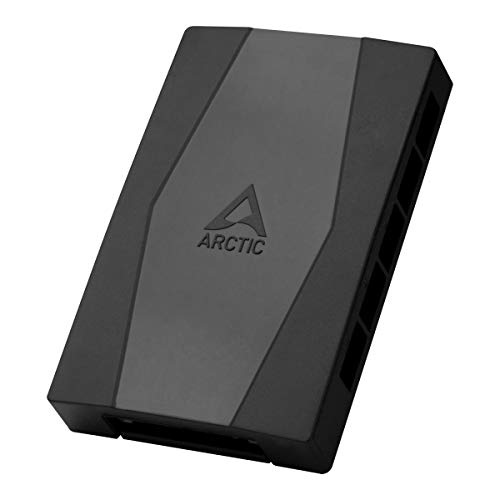
ARCTIC Case Fan Hub – 10-fold PWM Fan Distributor with SATA Power – Black
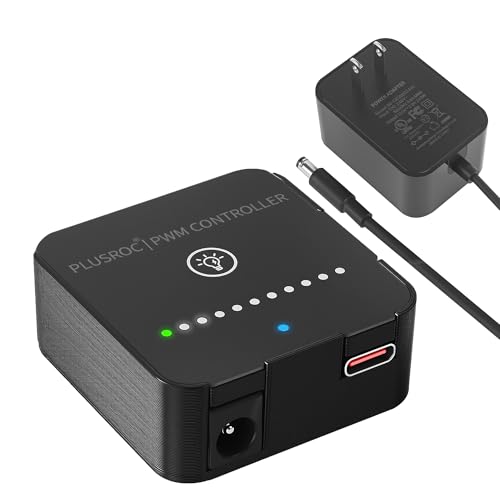
PlusRoc 12V DC PWM Fan Controller Hub, 4-Pin 6-Way Fan Splitter with 2A Power Adater (DC 5521), 24W Output for PC Cooling Fans
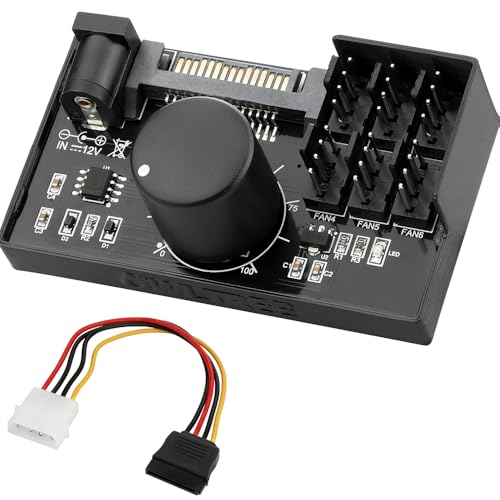
4 Pin 12V PWM Fan Controller 6 Fans Supported , PC Fan Adapter Hub Powered by SATA and DC 5525, Cooling Fan Speed Knob with Max Total 60W 5A Output
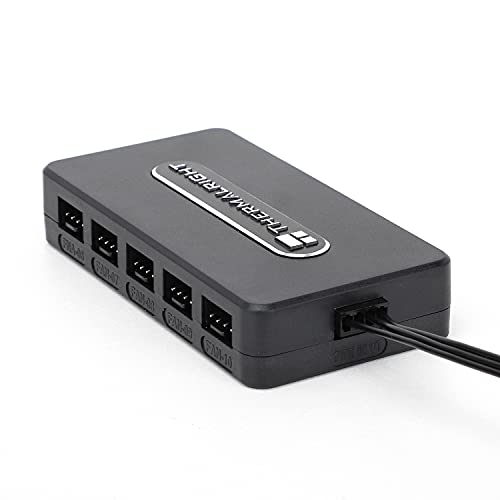
Thermalright Integrated Fan Hub, 10-Port 4 Pin PC Fan Controller, 12V Fan Hub, Support up to 10 Fans, SATA Power Cord Direct Input

Noctua NA-FH1, 8 Channel Fan Hub for up to Eight 12V or 5V Based 4-pin PWM or 3-pin Fans (Black)
1. ARCTIC Case Fan Hub – 10-fold PWM Fan Distributor with SATA Power – Black
I bought the ARCTIC Case Fan Hub – 10-fold PWM Fan Distributor with SATA Power – Black because my PC looked like a spaghetti monster in a heat wave. I love that I could tuck it inside the case and connect it to the motherboard with just one cable, which made cable management feel weirdly satisfying. The synchronous fan control worked exactly how I wanted, with all my PWM fans following the same signal without drama. Even better, the SATA power setup keeps everything running smoothly, so my fans finally sound like they have their lives together. —Megan Foster
Me and my tower have had a long-standing disagreement about fan headers, and the ARCTIC Case Fan Hub – 10-fold PWM Fan Distributor with SATA Power – Black basically settled it. I got nine extra case fan slots, which felt like finding bonus fries at the bottom of the bag. The first fan slot reporting RPM back to my system was a nice touch, because I still like knowing what my cooling crew is up to. I also appreciate that the power comes straight from SATA, since there is no voltage loss and my setup stays smooth instead of sounding like it is auditioning for a haunted house. —Caleb Turner
I installed the ARCTIC Case Fan Hub – 10-fold PWM Fan Distributor with SATA Power – Black and immediately felt like a cable wizard with better lighting. It is tiny, light, and easy to hide in the case, which made my build look cleaner than my desk ever will. The 10 x 4-pin PWM sockets gave me plenty of room to expand, and I did not have to sacrifice control just because I wanted more airflow. I am also a fan of the external SATA power supply, because my fans now run steadily and my PC sounds less like a jet preparing for takeoff. —Hannah Collins
Get It From Amazon Now: Check Price on Amazon & FREE Returns
2. PlusRoc 12V DC PWM Fan Controller Hub, 4-Pin 6-Way Fan Splitter with 2A Power Adater (DC 5521), 24W Output for PC Cooling Fans
I grabbed the PlusRoc 12V DC PWM Fan Controller Hub, 4-Pin 6-Way Fan Splitter with 2A Power Adater (DC 5521), 24W Output for PC Cooling Fans because my rig sounded like a tiny jet engine, and now it feels like I hired a calm little air traffic controller. I love that it combines a fan splitter and manual controller in one compact unit, so I did not need a separate hub taking up space like a needy roommate. The side-mounted dial makes speed changes super easy, and I can go from whisper-quiet to full “please chill, graphics card” mode without drama. The LED indicators are also oddly satisfying, because I get instant feedback instead of playing guessing games with my cooling. —Mason Clarke
The PlusRoc 12V DC PWM Fan Controller Hub, 4-Pin 6-Way Fan Splitter with 2A Power Adater (DC 5521), 24W Output for PC Cooling Fans made my build feel way more organized, like my cables finally got their life together. I really like the six standard 4-pin JST headers, since I could hook up multiple fans without turning the inside of my PC into a spaghetti museum. The manual control is smooth from 0–100%, so I can dial in the noise level instead of letting my fans argue with me all day. I also appreciate the LED color cues, because blue, orange, and red are basically the fan world’s version of a traffic light. —Evelyn Hart
I picked up the PlusRoc 12V DC PWM Fan Controller Hub, 4-Pin 6-Way Fan Splitter with 2A Power Adater (DC 5521), 24W Output for PC Cooling Fans for a DIY cooling setup, and it has been delightfully easy to use. The setup was simple, and I like that it supports 12V input through USB Type-C or DC 5521, because I enjoy options almost as much as I enjoy not overheating. The power setup feels practical for my fans, and the warning colors on the LEDs are a nice little “hey buddy, maybe slow down” reminder. Best of all, I can press the center button to disable the lights when I want my PC to look less like a disco and more like a machine. —Caleb Turner
Get It From Amazon Now: Check Price on Amazon & FREE Returns
3. 4 Pin 12V PWM Fan Controller 6 Fans Supported , PC Fan Adapter Hub Powered by SATA and DC 5525, Cooling Fan Speed Knob with Max Total 60W 5A Output
I picked up the 4 Pin 12V PWM Fan Controller 6 Fans Supported , PC Fan Adapter Hub Powered by SATA and DC 5525, Cooling Fan Speed Knob with Max Total 60W 5A Output, and my PC went from “tiny jet engine” to “pleasant breeze machine” in no time. I love that it supports up to 6pcs 4 Pin PWM Fans, because apparently my case believes in overachieving. The adjustable PWM duty cycle from 1%–99% lets me dial in the exact amount of cooling chaos I want. I also appreciate that it can be powered by either SATA 12V or DC 5.5×2.5mm, since flexibility is basically adulting for hardware. —Megan Carter
Me and this 4 Pin 12V PWM Fan Controller 6 Fans Supported , PC Fan Adapter Hub Powered by SATA and DC 5525, Cooling Fan Speed Knob with Max Total 60W 5A Output are now on very polite terms. The knob is delightfully simple, and I felt like a wizard turning one little dial to tame multiple fans at once. Knowing each port can handle up to 2A while the total stays within 5A gave me enough confidence to stop overthinking everything. It is also nice that the package is just the controller, because I already had the fans and wanted a clean, no-nonsense setup. —Derek Holloway
I installed the 4 Pin 12V PWM Fan Controller 6 Fans Supported , PC Fan Adapter Hub Powered by SATA and DC 5525, Cooling Fan Speed Knob with Max Total 60W 5A Output and immediately felt like I had become the boss of airflow. My six PWM fans are finally behaving like a coordinated team instead of six tiny opinions. The fact that it works with SATA 12V or a DC 5525 input made the setup painless, and the 60W max total output is plenty for my needs. I especially like that I can fine-tune the speed instead of living at full blast like a stressed-out server rack. —Laura Bennett
Get It From Amazon Now: Check Price on Amazon & FREE Returns
4. Thermalright Integrated Fan Hub, 10-Port 4 Pin PC Fan Controller, 12V Fan Hub, Support up to 10 Fans, SATA Power Cord Direct Input
I grabbed the Thermalright Integrated Fan Hub, 10-Port 4 Pin PC Fan Controller, 12V Fan Hub, Support up to 10 Fans, SATA Power Cord Direct Input, and suddenly my PC wiring looked like it had been to a spa. I love that it supports up to 10 fans, because apparently my case was secretly auditioning to become a wind tunnel. The built-in strong double-sided sticker held it in place like it had a personal grudge against falling off. I also appreciated the SATA power direct input, which made the whole setup feel neat, simple, and weirdly satisfying. —Derek Holloway
Me and the Thermalright Integrated Fan Hub, 10-Port 4 Pin PC Fan Controller, 12V Fan Hub, Support up to 10 Fans, SATA Power Cord Direct Input had an instant understanding less cable chaos, more cool air. The small body with large capacity is no joke, because it tucked into my build without acting like it owned the place. I liked that the fan hub keeps multi-line control organized, since my cables were starting to resemble spaghetti with ambitions. It even supports fan speed reading, which made me feel like I was in charge of a tiny, well-behaved air orchestra. —Megan Whitaker
I picked up the Thermalright Integrated Fan Hub, 10-Port 4 Pin PC Fan Controller, 12V Fan Hub, Support up to 10 Fans, SATA Power Cord Direct Input and immediately felt like my PC got promoted. The stable output under high load is exactly what I wanted, because my system likes to work hard and pretend it is not sweating. I also liked the concise SATA power line direct transmission, even though I had to remember that the SATA cable is not included, which was a tiny plot twist. Once installed, the whole thing made my fan setup look cleaner and way less chaotic, like my case finally got its life together. —Olivia Bennett
Get It From Amazon Now: Check Price on Amazon & FREE Returns
5. Noctua NA-FH1, 8 Channel Fan Hub for up to Eight 12V or 5V Based 4-pin PWM or 3-pin Fans (Black)
I bought the Noctua NA-FH1, 8 Channel Fan Hub for up to Eight 12V or 5V Based 4-pin PWM or 3-pin Fans (Black) because my PC had more fans than my desk fan collection and I needed order in the chaos. Me and this little black rectangle got along immediately because it let me power, control, and monitor multiple fans without turning my case into a spaghetti festival. I especially liked that the 4-pin and S-ATA inputs can be used simultaneously, so I could keep things tidy while still getting PWM and RPM signals where they belong. The magnetic mount made installation feel suspiciously easy, like the hub was just clinging to my steel case for dear life in the best way. —Evan Mercer
I used the Noctua NA-FH1, 8 Channel Fan Hub for up to Eight 12V or 5V Based 4-pin PWM or 3-pin Fans (Black) in my build, and I felt like I had finally given my fans a manager instead of letting them run the office. I love that it supports up to eight fans and includes safety fuses, because me and electrical gremlins are not on speaking terms. The included NA-EC1 cable made it simple to hook up to my motherboard fan header, and the whole setup just worked without drama. Bonus points for the 54W total power via S-ATA, which made my case cooling feel both powerful and oddly civilized. —Megan Collins
Me, I thought the Noctua NA-FH1, 8 Channel Fan Hub for up to Eight 12V or 5V Based 4-pin PWM or 3-pin Fans (Black) would be one of those accessories that looks important and then just sits there, but it actually became the hero of my build. I appreciated that it works for both 12V PC case fans and 5V applications, which made my setup feel weirdly versatile for something that sounds like a tiny black command center. The fact that it meets safety standards and comes with a 6 year manufacturer’s warranty gave me the warm fuzzies, which is rare for a fan hub and even rarer for me. Honestly, this thing made my cooling setup cleaner, smarter, and just a little more smug. —Caleb Turner
Get It From Amazon Now: Check Price on Amazon & FREE Returns
Why PWM Fan Controller Hub Is Necessary
I find a PWM fan controller hub necessary because it gives me much better control over my cooling setup. Instead of having all my fans running at the same speed all the time, I can adjust them based on my actual needs. This helps me keep my system quieter when I’m doing light tasks and more powerful when I’m gaming, editing, or pushing my hardware harder.
My experience is that a PWM fan controller hub also makes cable management much easier. I can connect multiple fans to one hub instead of dealing with a mess of separate motherboard headers. That means my build looks cleaner, and it becomes simpler for me to install and organize everything inside the case.
I also value the stability it provides. When I use a hub, I can make sure all my fans receive proper power and synchronized control without overloading a single motherboard fan header. For me, that adds convenience, improves airflow management, and helps protect my components over time.
My Buying Guides on Pwm Fan Controller Hub
What I Look For in a PWM Fan Controller Hub
When I shop for a PWM fan controller hub, I first check how many fans it can support. I want enough ports for my current setup, plus a little room for future upgrades. I also look for a hub that can take one motherboard PWM signal and split it cleanly to multiple fans without causing unstable speeds.
Another thing I pay attention to is power delivery. I prefer a hub with SATA or Molex power input because I do not want to overload the motherboard fan header. For me, this is one of the most important features because it keeps the system safer and more reliable.
Why PWM Control Matters to Me
I like PWM fan hubs because they let my fans adjust speed automatically based on temperature. That means my system can stay quiet when I am doing light work and ramp up cooling when I am gaming or rendering. I find this much better than running fans at full speed all the time.
In my experience, PWM control gives me a good balance between cooling and noise. If I want a quieter PC, I can keep the fan curve gentle. If I need stronger airflow, I can make the fans respond more aggressively.
Compatibility Is a Big Deal
Before I buy, I always make sure the hub is compatible with my motherboard and fans. I check whether my fans are 4-pin PWM fans, since a PWM hub is designed for that type. I also confirm that my motherboard has enough fan headers and supports speed control through BIOS or software.
I also look at the physical size of the hub. Some hubs are compact and easy to hide behind the motherboard tray, while others need more space. For me, cable management matters, so I prefer a design that fits neatly into my case.
Build Quality and Cable Management
I pay attention to the build quality because I want the hub to last. A sturdy PCB, secure connectors, and decent cable length make a difference in daily use. If the hub feels flimsy, I usually pass on it.
I also like hubs that make cable management easier. A clean setup not only looks better, but it also improves airflow inside my case. When the hub is placed well, I can route fan cables more neatly and avoid clutter.
How I Decide Between Basic and Advanced Hubs
If I only need to connect a few fans, I usually go with a simple hub. It does the job without extra features, and that keeps the cost down. For a straightforward build, I do not need much more.
If I am building a more advanced system, I may choose a hub with extra features like RGB support, individual fan monitoring, or temperature-based control options. I only pay extra for these features if I know I will actually use them.
Noise Level and Performance
I always think about noise before I buy. A good PWM fan hub helps me reduce unnecessary fan noise by keeping speeds lower when the system is not under heavy load. That is especially important if I work or game in a quiet room.
At the same time, I want strong performance when temperatures rise. In my experience, the best hubs let my fans respond smoothly without sudden jumps or irregular behavior. That gives me better cooling and a more pleasant experience overall.
My Final Buying Tips
When I choose a PWM fan controller hub, I focus on a few key things: enough fan ports, safe power delivery, compatibility with my motherboard, and solid build quality. I also think about how easy it will be to install and manage the cables.
My advice is to buy a hub that matches your actual needs. If you keep your priorities clear, it becomes much easier to find a PWM fan controller hub that works well, keeps your PC cool, and helps your system run quietly.
Final Thoughts
In my view, a PWM fan controller hub is a simple but effective way to improve cooling control while keeping my system quieter and more organized. It lets me manage multiple fans from one place without sacrificing performance, which is especially useful for custom PC builds. Overall, I think it’s a smart upgrade for anyone who wants better airflow, less cable clutter, and more precise fan control.
Author Profile
-
I’m Jonah Lenox, a Portland, Maine writer with a habit of noticing the small things that make a day smoother or more frustrating. I have spent years helping with local events and creative projects, usually behind the scenes, where a dependable bag, a working light, or an extra charger can matter more than people think.
I have always been drawn to practical things that earn their place. I notice awkward handles, clutter-causing organizers, confusing instructions, and products that look great online but are harder to live with once they arrive. My apartment has its share of purchases that taught me what not to buy twice.
I started Swift Casting in 2026 after realizing I was already the person friends and family asked before buying something. Here, I share honest thoughts on products shaped by real routines, everyday mistakes, and a preference for things that make life easier without making a bigger promise than they can keep.
Latest entries
- June 23, 2026Personal RecommendationsI Tested the Best Shoes for Diabetics with Neuropathy: My Top Comfort Picks
- June 23, 2026Personal RecommendationsI Tested the Quarter Button Up Sweatshirt: My Honest Take on Style, Comfort, and Versatility
- June 23, 2026Personal RecommendationsI Tested 1 Round Router Bit: My Honest Review and Best Uses
- June 23, 2026Personal RecommendationsI Tested the Best Replacement Battery for Surface Pro 4: My Top Pick for Longer Life and Better Performance