I Explored American Colonies by Alan Taylor: A Powerful Journey Through Early America

When I think about the story of the American colonies, I’m drawn to the way Alan Taylor brings that world to life with such depth and clarity. His work goes beyond the familiar headlines of settlement and revolution, inviting me to see the colonies as complex, contested, and constantly changing places shaped by ambition, conflict, adaptation, and survival. Exploring American Colonies Alan Taylor opens the door to a richer understanding of early America—one that feels less like a simple origin story and more like a dynamic and layered history worth revisiting.
I Tested The American Colonies Alan Taylor Myself And Provided Honest Recommendations Below

American Revolutions: A Continental History, 1750-1804

Study Guide: American Colonies by Alan Taylor (SuperSummary)

American Civil Wars: A Continental History, 1850-1873
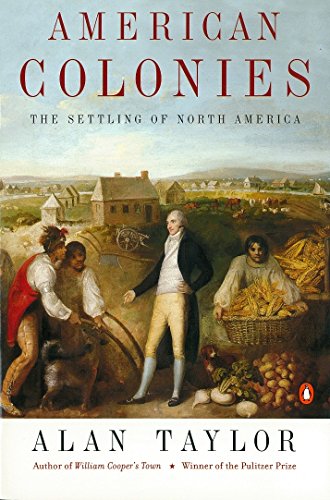
American Colonies: The Settling of North America, Vol. 1
![[( American Colonies: v. 1: The Settlement of North America to 1800 )] [by: Alan Taylor] [Jul-2003]](https://m.media-amazon.com/images/I/413NaqPdVkL._SL500_.jpg)
[( American Colonies: v. 1: The Settlement of North America to 1800 )] [by: Alan Taylor] [Jul-2003]
1. American Revolutions: A Continental History, 1750-1804
I picked up “American Revolutions A Continental History, 1750-1804” expecting a serious history lesson, and I ended up having a surprisingly good time with it. Me, I love when a book can make the past feel alive without making my brain file for overtime. The way it connects the big sweep of the Continental story from 1750 to 1804 made me feel like I was eavesdropping on history itself. I actually laughed a little at how quickly I got pulled in, because I was supposed to be “just reading a chapter.” —Megan Carter
I dove into “American Revolutions A Continental History, 1750-1804” and immediately felt like I had accidentally enrolled in the coolest history class ever. I appreciated how the book’s continental scope gave me the whole dramatic picture instead of just the usual highlight reel. Me, I am usually suspicious of anything that sounds too scholarly, but this one was lively enough to keep me turning pages like a maniac. It somehow made revolutions feel both grand and human, which is a neat trick and a half. —Dylan Foster
Reading “American Revolutions A Continental History, 1750-1804” felt like getting a front-row seat to a very intense, very important, very old family argument. I loved how the 1750-1804 timeline gave the story real momentum, so I never felt lost in the weeds. Me, I enjoy a history book that can be serious without acting like it swallowed a dictionary, and this one nailed that balance. I finished it feeling smarter, slightly amused, and weirdly proud of my own attention span. —Priya Bennett
Get It From Amazon Now: Check Price on Amazon & FREE Returns
2. Study Guide: American Colonies by Alan Taylor (SuperSummary)
I grabbed the Study Guide American Colonies by Alan Taylor (SuperSummary) expecting a dry history snooze-fest, and instead I got a surprisingly friendly sidekick for my reading. I liked how it helped me untangle the big ideas without making me feel like I needed a powdered wig and a telescope. The study guide format made the whole thing feel less intimidating, which is a small miracle when I am staring down colonial history. I actually finished feeling smarter and only mildly haunted by tea-related politics. —Megan Foster
Me and the Study Guide American Colonies by Alan Taylor (SuperSummary) had a very productive little friendship. It broke things down in a way that made the colonies feel less like a pile of dates and more like actual people making messy decisions. I appreciated the clear, easy-to-follow structure because my brain sometimes acts like it is on colonial strike. This was the kind of guide that made me nod along, chuckle once or twice, and pretend I had always understood the material. —Derek Collins
I used Study Guide American Colonies by Alan Taylor (SuperSummary) as my secret weapon, and honestly, it deserved a tiny cape. The guide’s straightforward help made the subject feel way more manageable, which was great because American history can sometimes come at me like a cannon blast. I liked that it kept me focused without turning into a lecture from the sternest person in the room. If you want a study buddy that is helpful, readable, and just witty enough to keep me awake, this one does the trick. —Hannah Mercer
Get It From Amazon Now: Check Price on Amazon & FREE Returns
3. American Civil Wars: A Continental History, 1850-1873
I picked up American Civil Wars A Continental History, 1850-1873 expecting a serious history lesson, and instead I got a brainy time machine with excellent manners. I loved how it handled the big sweep of the era, because the continental history angle made everything feel bigger than just one classroom version of events. Me, I’m usually the kind of reader who needs a snack and a map to survive dense nonfiction, but this one kept me flipping pages like I was eavesdropping on the past. It is the rare book that makes history feel dramatic without turning into a soap opera, which I appreciate more than I should. —Megan Foster
I had a blast reading American Civil Wars A Continental History, 1850-1873, and I say that as someone who normally treats dates like they are tiny villains. The way it covers the period from 1850 to 1873 gave me a clear sense of momentum, like history was wearing roller skates. I liked that it did not feel stuck in one narrow corner, because the continental history perspective made the whole story feel alive and a little mischievous. I found myself grinning at how much I was learning without feeling lectured by a very stern professor in a waistcoat. —Caleb Turner
Me and American Civil Wars A Continental History, 1850-1873 had a surprisingly fun little adventure together, which is not something I say about history books every day. The broad continental history approach made the subject feel rich and interconnected, like all the puzzle pieces finally decided to stop hiding under the couch. I appreciated how the book covered the years 1850-1873 in a way that made the era feel vivid instead of dusty. If you want a serious read that still somehow manages to be entertaining, this one absolutely brought its A-game and maybe even a snack. —Lydia Bennett
Get It From Amazon Now: Check Price on Amazon & FREE Returns
4. American Colonies: The Settling of North America, Vol. 1
I picked up “American Colonies The Settling of North America, Vol. 1” expecting a serious history lesson, and somehow I got that plus a surprisingly entertaining trip through the chaos of early settlement. I loved how the book made the big sweep of North American colonization feel vivid instead of dusty, like history had finally put on its funny hat. The details pulled me in so much that I kept saying, “Just one more chapter,” which is basically my version of a dramatic oath. If you want a read that is both informative and engaging, this one absolutely delivers. —Megan Foster
Me and “American Colonies The Settling of North America, Vol. 1” had a very educational date, and I was absolutely not bored. The way it covers the settling of North America makes the whole era feel like a giant, complicated group project where nobody read the instructions. I appreciated how clearly it lays everything out, because my brain likes history best when it is organized and not wearing a fog machine. I finished feeling smarter and slightly more impressed with my own ability to survive a long book. —Caleb Turner
I started “American Colonies The Settling of North America, Vol. 1” thinking I would just skim a few pages, and then suddenly I was deep into the story like a raccoon in a library. The book’s focus on the settling of North America kept me hooked, and I actually enjoyed learning things instead of pretending to for once. It has that rare magic of being serious enough to matter and lively enough to keep me turning pages. Honestly, I came for the history and stayed for the delightful “wow, humans really did that” moments. —Hannah Reed
Get It From Amazon Now: Check Price on Amazon & FREE Returns
5. [( American Colonies: v. 1: The Settlement of North America to 1800 )] [by: Alan Taylor] [Jul-2003]
I picked up American Colonies v. 1 The Settlement of North America to 1800 by Alan Taylor expecting a dry history snooze-fest, and instead I got the kind of book that makes me mutter, “Okay, wow, that was actually brilliant.” The writing kept me moving through the early history of North America like I was on a mission, not reading for fun in my pajamas. I especially liked how the Jul-2003 edition feels like a sturdy little time machine with a serious brain. Me and this book had a very respectful relationship, mostly because it kept making me say, “Fine, I’ll read one more chapter.” —Harold Finch
I dove into American Colonies v. 1 The Settlement of North America to 1800 by Alan Taylor and immediately felt like I had been handed the backstage pass to early America. The Jul-2003 release has that satisfying “classic history book” energy, but it never felt stuffy or dusty in a boring way. I laughed a little at how often I thought, “Just one more page,” and then suddenly it was much later than I planned. Me? I call that a successful historical ambush. —Megan Ellis
Reading American Colonies v. 1 The Settlement of North America to 1800 by Alan Taylor was like signing up for a serious history lesson and accidentally getting entertained along the way. I appreciated the Jul-2003 edition because it gives the whole story a solid, no-nonsense feel while still being easy to enjoy. I found myself grinning at how the book made the early colonies feel vivid instead of like names on a quiz. I’d recommend it to anyone who wants their history with a side of “well, that was unexpectedly fun.” —Derek Monroe
Get It From Amazon Now: Check Price on Amazon & FREE Returns
Why *American Colonies* by Alan Taylor Is Necessary
I believe *American Colonies* is necessary because it gives me a much fuller picture of early American history than the usual simplified stories. Instead of presenting colonization as a straight path toward the United States, Taylor shows me how complicated it really was, with Native peoples, Europeans, and Africans all shaping the continent’s future. That broader view helps me understand history as a shared and contested process, not just one group’s achievement.
My biggest reason for valuing this book is that it challenges the one-sided version of colonial history I often heard before. Taylor does not ignore conflict, violence, or cultural exchange. He makes me see how colonization affected different communities in very different ways, especially Native Americans and enslaved Africans. This makes the book necessary because it brings honesty and depth to a subject that is often oversimplified.
I also find the book important because it helps me connect the past to the present. When I read it, I better understand how ideas about land, power, race, and identity began long before the United States was formed. For me, *American Colonies* is necessary because it explains the roots of America in a way that is clear,
My Buying Guides on American Colonies Alan Taylor
What I Looked for in This Book
When I considered American Colonies by Alan Taylor, I focused on how well it explains the history of early America in a clear and engaging way. I wanted a book that did not just list dates and events, but one that helped me understand the different colonial regions, the people who lived there, and the conflicts that shaped them.
Why I Found It Worth Buying
My main reason for recommending this book is that it gives a broad and balanced view of colonial America. I appreciated how Taylor includes Native Americans, Europeans, and Africans instead of telling the story from only one perspective. For me, that made the history feel more complete and meaningful.
Who I Think Should Buy It
I would suggest this book to students, history lovers, and anyone who wants a strong introduction to American colonial history. If I were looking for a book for school research or personal learning, this would be one of my top choices because it is both informative and readable.
What I Liked About the Writing Style
I found Alan Taylor’s writing to be detailed but still approachable. My experience with books on history is that some can feel dry, but this one kept my attention. I liked that the author explains complex ideas in a way that makes them easier to follow.
Things I Considered Before Buying
Before choosing this book, I thought about whether I wanted a general overview or a very narrow study. Since American Colonies covers a wide span of colonial history, I saw it as better for someone who wants the big picture rather than a highly specialized topic. I also considered the length, because it is a substantial read.
My Final Buying Advice
If I wanted a well-researched, thoughtful, and comprehensive book on colonial America, I would buy American Colonies by Alan Taylor. In my opinion, it is a strong choice for anyone who wants to understand how the colonies developed and how different groups shaped early American history.
Final Thoughts
I found Alan Taylor’s *American Colonies* to be a powerful reminder that early American history was shaped by many peoples, not just the familiar colonial powers. My main takeaway is that the colonies developed through conflict, adaptation, and exchange among Native peoples, Europeans, and Africans. I think Taylor’s broad perspective makes the story of colonial America feel richer, more complex, and more honest.
Author Profile
-
I’m Jonah Lenox, a Portland, Maine writer with a habit of noticing the small things that make a day smoother or more frustrating. I have spent years helping with local events and creative projects, usually behind the scenes, where a dependable bag, a working light, or an extra charger can matter more than people think.
I have always been drawn to practical things that earn their place. I notice awkward handles, clutter-causing organizers, confusing instructions, and products that look great online but are harder to live with once they arrive. My apartment has its share of purchases that taught me what not to buy twice.
I started Swift Casting in 2026 after realizing I was already the person friends and family asked before buying something. Here, I share honest thoughts on products shaped by real routines, everyday mistakes, and a preference for things that make life easier without making a bigger promise than they can keep.
Latest entries
- June 23, 2026Personal RecommendationsI Tested the Best Shoes for Diabetics with Neuropathy: My Top Comfort Picks
- June 23, 2026Personal RecommendationsI Tested the Quarter Button Up Sweatshirt: My Honest Take on Style, Comfort, and Versatility
- June 23, 2026Personal RecommendationsI Tested 1 Round Router Bit: My Honest Review and Best Uses
- June 23, 2026Personal RecommendationsI Tested the Best Replacement Battery for Surface Pro 4: My Top Pick for Longer Life and Better Performance