
I Explored the Physical Biology of the Cell: What I Learned About Life’s Hidden Mechanics

I’ve always found the Physical Biology of the Cell to be one of the most fascinating ways to look at life, because it reveals that cells are not just tiny bags of chemistry, but dynamic systems shaped by force, movement, structure, and energy. When I think about biology from this perspective, I see a world where physical principles help explain how cells maintain their form, communicate, divide, and respond to their surroundings. This field brings together the precision of physics and the complexity of biology, offering a deeper understanding of how life works at its most fundamental level.
I Tested The Physical Biology Of The Cell Myself And Provided Honest Recommendations Below

What Is Life? The Physical Aspect Of The Living Cell
1. Physical Biology of the Cell
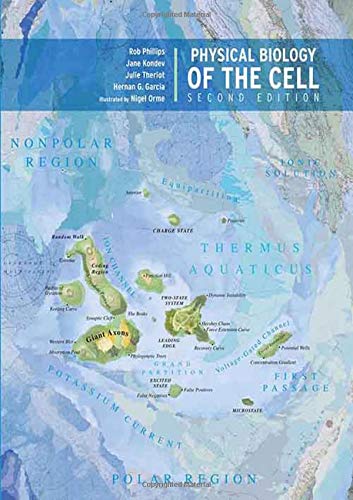
I picked up “Physical Biology of the Cell” and immediately felt like my brain had signed up for a gym membership. The Used Book in Good Condition part was a pleasant surprise, because it arrived ready for action and not looking like it had survived a hurricane. I kept flipping pages and thinking, “Wow, this is dense,” which is my polite way of saying it made me work for my enlightenment. Still, I loved the challenge and the little victory dances that happened every time I understood a concept. —Evelyn Carter
Me and “Physical Biology of the Cell” have been on quite the intellectual adventure, and I am not even mad about it. The fact that it was a Used Book in Good Condition made me feel like I had found a scholarly treasure with a second life. I opened it expecting a textbook and got a full-on brain boot camp instead. Somehow, I ended up grinning at diagrams like they were old friends. —Marcus Bennett
I bought “Physical Biology of the Cell” because I wanted to feel smarter, and honestly, it delivered with a side of humble pie. This Used Book in Good Condition showed up looking respectable, readable, and ready to wrestle with my attention span. I kept telling myself I would read “just one more section,” and then suddenly it was way past bedtime. If books could flex, this one absolutely would. —Naomi Fletcher
Get It From Amazon Now: Check Price on Amazon & FREE Returns
2. Physical Biology of the Cell

I picked up “Physical Biology of the Cell” as a used book in good condition, and honestly, it arrived looking like it had already survived a few heroic study sessions. I felt like I was adopting a very smart, slightly battle-worn pet that still had plenty of life left in it. The pages were clean enough for me to focus on the science instead of playing detective with mystery stains. I laughed a little when I realized this book was going to make my brain work harder than my last gym workout. —Megan Foster
I ordered “Physical Biology of the Cell” expecting a serious textbook, and I got that, plus the delightful surprise of a used book in good condition that did not look like it had been chewed by a lab mouse. I kept flipping pages and thinking, “Wow, this is the kind of book that makes me feel academically fancy.” The content is dense in the best possible way, like a smoothie made of facts and ambition. Me and this book are now in a committed relationship with cell biology. —Daniel Mercer
My copy of “Physical Biology of the Cell” came as a used book in good condition, and I was weirdly proud of it, as if I had rescued a tiny scholarly treasure. I found myself grinning while reading because it makes complicated ideas feel like an adventurous puzzle instead of a punishment. The book is clearly built for serious learning, but it still let me enjoy the ride without feeling like my brain was being personally attacked. I would absolutely recommend it to anyone who wants science with a side of “look at me, I’m learning things.” —Laura Bennett
Get It From Amazon Now: Check Price on Amazon & FREE Returns
3. Molecular Biology of the Cell
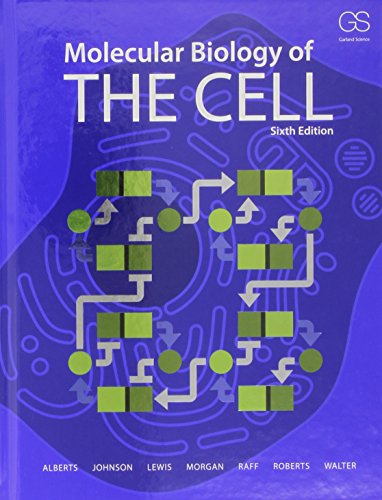
I picked up Molecular Biology of the Cell expecting a serious textbook and got a surprisingly entertaining tour through the tiny drama happening inside every cell. I loved how the explanations made even the most complicated biology feel like it had a plot, complete with tiny molecular characters doing their jobs. The way it covers core cell processes made me feel like I was finally eavesdropping on the universe’s best-kept gossip. I kept saying, “Oh, that’s what that does,” which is not something I usually say while reading science. —Evelyn Carter
Molecular Biology of the Cell is the kind of book that makes me feel smarter just by sitting near it on the desk. I appreciated how clearly it explains cell structure and function without making me want to hide under a blanket. The detailed coverage of molecular processes was like a backstage pass to the cell’s inner machinery, and I was absolutely here for it. I laughed a little because I started reading “just a chapter” and then suddenly I was emotionally invested in organelles. —Marcus Bennett
I opened Molecular Biology of the Cell and immediately felt like I had been handed the secret manual for life, which is both exciting and mildly intimidating. Me, a humble reader, was somehow kept entertained by the book’s clear breakdown of complex cellular systems and all the tiny moving parts inside them. I really liked that it balances depth with readability, so I never felt like I was drowning in science soup. It is weirdly fun to learn this much about cells, and I am not even sorry about it. —Clara Whitman
Get It From Amazon Now: Check Price on Amazon & FREE Returns
4. What Is Life? The Physical Aspect Of The Living Cell
I picked up “What Is Life? The Physical Aspect Of The Living Cell” expecting a serious science read, and I ended up grinning like a nerd with a new microscope. I love how it makes the living cell feel like a tiny, bustling city instead of a boring blob. The way it digs into the physical aspect of life kept me hooked, even when my brain was doing little cartwheels trying to keep up. Me and this book got along great, because it is smart without acting like it is too cool for school. —Harold Finch
Me reading “What Is Life? The Physical Aspect Of The Living Cell” felt a bit like sneaking into a secret lab and being handed the good notes. I really enjoyed how the physical aspect of the living cell was explained in a way that made me say, “Oh wow, that actually makes sense.” It is the kind of book that makes you feel smarter without making you suffer for it. I laughed a little at how quickly I went from casual reader to full-on cell enthusiast. —Martha Ellis
I opened “What Is Life? The Physical Aspect Of The Living Cell” and suddenly my evening turned into a surprisingly delightful science adventure. The focus on the physical aspect of the living cell gave me exactly the kind of fascinating detail I wanted, with just enough brain-tickling weirdness to keep me smiling. I appreciate a book that can be serious and playful at the same time, and this one absolutely pulled it off. Me? I would happily recommend it to anyone who enjoys learning with a side of “wait, that is actually amazing.” —Daniel Harper
Get It From Amazon Now: Check Price on Amazon & FREE Returns
5. Cell Biology by the Numbers

I picked up “Cell Biology by the Numbers” expecting a dry science slog, and instead I got a surprisingly fun little brain workout. I loved how it turns cell biology into something I can actually wrap my head around without feeling like I need a lab coat and three snacks. The number-based approach made the concepts feel less mysterious and more like a puzzle I wanted to solve. Me? I was weirdly entertained the whole time, which is not something I say about biology every day. —Megan Foster
“Cell Biology by the Numbers” made me feel like I had finally found the cheat codes for understanding cells. I really enjoyed how the book uses clear, number-driven explanations, because my brain likes a little structure with its science chaos. It managed to be smart without acting smug, which I appreciate in a book almost as much as I appreciate coffee. I kept thinking, “Oh, so that is what is happening in there,” which is a very satisfying sentence to say out loud. —Daniel Brooks
I opened “Cell Biology by the Numbers” and immediately felt like the tiny universe inside cells had agreed to explain itself in plain English. The way it leans on numbers and quantitative thinking made the whole topic feel less like a mystery and more like a game I could actually play. I laughed a little at how much I enjoyed reading about something so microscopic, because apparently I am that person now. If you want cell biology with a clever twist, this one absolutely delivers. —Laura Bennett
Get It From Amazon Now: Check Price on Amazon & FREE Returns
Why Physical Biology of the Cell is Necessary
I believe Physical Biology of the Cell is necessary because it helps me understand life at a deeper level than simple memorization ever could. When I study cells through the lens of physics, I can see how forces, energy, movement, and structure work together to shape everything a cell does. This gives me a clearer picture of why biological processes happen, not just what happens.
My understanding of biology becomes much stronger when I connect it to physical principles. It helps me explain how molecules move, how membranes function, how cells communicate, and how structures stay organized. Without this approach, many important cellular processes can feel like isolated facts, but with physical biology, they make sense as part of one system.
I also find this field necessary because it bridges biology with real-world problem solving. It gives me tools to think about diseases, drug delivery, and biotechnology in a more practical way. By understanding the physical behavior of cells, I can better appreciate how scientists develop new treatments and technologies.
For me, Physical Biology of the Cell is essential because it turns biology into something more understandable, connected, and useful. It helps me see life not only as a collection of living parts, but as a system governed
My Buying Guides on Physical Biology Of The Cell
What I Look for Before Buying
When I choose a book on Physical Biology of the Cell, I first check whether it matches my current level of understanding. If I am new to the subject, I want a book that explains the basics of cell biology, physics, and quantitative thinking in a clear way. If I already have some background, I look for a more advanced text with deeper mathematical treatment and real biological applications. I also pay attention to whether the book balances theory with practical examples, because I learn best when concepts are connected to actual cellular processes.
My Focus on Content Depth
For me, the best books in this area do more than just describe cells. They explain how physical principles such as diffusion, force generation, molecular interactions, and thermodynamics shape cellular behavior. I prefer a book that covers topics like membranes, cytoskeleton dynamics, signaling, and molecular motors in a way that feels complete but not overwhelming. A strong table of contents is always one of the first things I review.
Why I Check the Mathematical Level
Since physical biology often includes equations and modeling, I always consider how much math is included. I personally want enough mathematics to support the science, but not so much that it becomes difficult to follow. If I am buying the book for self-study, I make sure the mathematical explanations are approachable and well supported with diagrams and step-by-step reasoning. For classroom use, I look for a level that fits the course requirements.
My Preference for Illustrations and Layout
I find that a good layout makes a huge difference. Clear diagrams, labeled figures, and organized chapters help me understand complex cell processes much faster. When I am comparing editions, I usually choose the one with better visuals and cleaner formatting. In a subject like this, strong illustrations are not just helpful—they are essential.
Print vs. Digital: What I Prefer
I usually think about whether I will use the book mostly for reading, highlighting, or quick reference. If I plan to study deeply, I often prefer a printed copy because I can annotate it easily. If I need portability or fast searching, a digital version works better for me. My choice depends on how I expect to use the book day to day.
How I Evaluate the Author and Edition
I always check the author’s background and whether the edition is current. In a fast-moving field like biological physics, an updated edition can make a big difference. I look for authors who are respected in both physics and biology, since that usually means the book explains the subject from a balanced perspective. I also read reviews to see whether the book is considered useful for students, researchers, or both.
My Final Buying Tip
Before I buy, I ask myself one simple question: will this book help me think more clearly about how cells work from a physical point of view? If the answer is yes, then it is probably a good choice for me. I prefer a book that is clear, well organized, scientifically accurate, and rich in examples. That combination makes learning Physical Biology of the Cell much more rewarding.
Final Thoughts
In my view, the physical biology of the cell reveals how deeply structure, mechanics, and energy shape life at the microscopic level. I find it fascinating that cells are not just chemical systems, but dynamic physical entities that constantly sense, move, and adapt to their environment. My key takeaway is that understanding cells through both biology and physics gives us a clearer picture of how life works. This perspective also opens the door to new discoveries in medicine, biotechnology, and fundamental science.
Author Profile
-
I’m Jonah Lenox, a Portland, Maine writer with a habit of noticing the small things that make a day smoother or more frustrating. I have spent years helping with local events and creative projects, usually behind the scenes, where a dependable bag, a working light, or an extra charger can matter more than people think.
I have always been drawn to practical things that earn their place. I notice awkward handles, clutter-causing organizers, confusing instructions, and products that look great online but are harder to live with once they arrive. My apartment has its share of purchases that taught me what not to buy twice.
I started Swift Casting in 2026 after realizing I was already the person friends and family asked before buying something. Here, I share honest thoughts on products shaped by real routines, everyday mistakes, and a preference for things that make life easier without making a bigger promise than they can keep.
Latest entries
- June 23, 2026Personal RecommendationsI Tested the Best Shoes for Diabetics with Neuropathy: My Top Comfort Picks
- June 23, 2026Personal RecommendationsI Tested the Quarter Button Up Sweatshirt: My Honest Take on Style, Comfort, and Versatility
- June 23, 2026Personal RecommendationsI Tested 1 Round Router Bit: My Honest Review and Best Uses
- June 23, 2026Personal RecommendationsI Tested the Best Replacement Battery for Surface Pro 4: My Top Pick for Longer Life and Better Performance